

Insider’s guide to motorcycle touring in India


Have you always wanted to tour India but wondered, in a country so vast and diverse, where to even begin? From soaring Himalayan peaks to the sun-drenched coast of the Arabian Sea, every adventure biker deserves to experience the joy of riding in this extraordinary country at least once in their life. And to help get you started, Alex Pirie, founder and lead rider of the tour operator Nomadic Knights, gives us the inside scoop on exploring India by motorcycle.
This is my 20th year of adventure riding in India, and while I’ve ridden through every region and state in the country in that time, it’s exciting to know there is so much more to see and discover.
That’s the wonderful thing about this vast and beautiful country: it is a living, breathing tapestry of colour and chaos, bursting with immense mountains, sun-soaked coastline, ancient temples, cosmopolitan cities and, handily for you and me, some of the best motorcycling on the planet.
A lifetime wouldn’t be enough to explore it all, although I’m giving it my best shot.
 Riding in the Himalayas is one of the most challenging yet rewarding adventures you can have on two wheels
I ride around 20,000 miles each year both leading people on tours and in my downtime. When I get home after a tour, I tend to last around 10 days before I feel the need to ride again.
There’s something inside of me that can’t get enough of exploring this country. I tend to pack the bike up and set off solo with a destination in mind but not set in stone. I like to see where the road takes me and there is no better place to do that than in India because it has everything that any biker could wish for.
You’ll discover stunning tarmac roads in the south of the country snaking alongside the Arabian Sea on the west coast, or hugging the Bay of Bengal and the Indian ocean on the east coast. There are also rain forests, tiger reserves, vast arid plains, remote high-altitude desert, and crazy bustling cities.
And of course, let’s not forget the legendary and daunting Indian Himalayan mountains. Once you’ve ridden them, it’s an experience that stays etched in your mind forever.
 Be ready for the unexpected in the Himalayas
The mountains start at around 8,000ft in the lower regions and tower as high as 28,169ft, with India being home to the third highest mountain in the world, Kangchenjunga. We don’t ride as high as that, no one does, but we traverse the world’s highest motorable roads at over 18,000ft, which is higher than Everest Base Camp. It’s as high as we can get, legally.
Away from the riding, one of India’s greatest exports is food, and you may well be having a curry for tea tonight. You’ll find Indian restaurants everywhere in the world for good reason. Regardless of where you choose to ride, the food won’t disappoint. It’s as varied as the culture.
 You’ll look forward to the chai stops
Every town and village has its own recipes handed down over generations. And the early morning chai stops (Indian sweet tea) are always a favourite. After a few days of exploring India, chai will be a firm favourite. It’s so refreshing after a few hours in the saddle.
Where to ride
You’re spoilt for choice when it comes to choosing where to ride in India, a decision that can be somewhat daunting if you’re new to this vast country. Of course, the Himalayas offer up some of the best adventure riding in the world and are quite rightly at the top of many people’s bucket list.
I still get a huge thrill riding them even after all these years and it’s hugely rewarding to see the joy on people’s faces when they explore them for the first time. However, we’ll get to the Himalayas in a while because there are many other places in India that are certainly worth considering.
For example, I do a lot of solo riding at home, and within 30 minutes of where I live in South India, I’m into the Western Ghats Mountain range that stretches 1,000 miles along the west coast. The highest peak is just over 8,800ft and the riding is much less challenging than the Himalayas.
 The bridge crossings in South India are a test of nerve
The roads are mostly tarmac and over the years I’ve discovered some truly beautiful places, hidden gems that are an absolute joy to explore.
This was where the idea came for Nomadic Knights’ Grand Canyon India tour. Yes, India does indeed have its own Grand Canyon in the southern state of Andhra Pradesh, and it is as vast and awe-inspiring as its American counterpart.
I decided to include it in a route that I wanted to be way off the tourist trail to let riders see a part of India that most people don’t even know exists, let alone ride there. It’s safe to say the route and the parts of the country it passes through never fail to impress.
 Riding in North India is like exploring the roof of the world
And then, of course you have some of the most beautiful coastline and beaches in the world in South India. If you think about it as a sunshine biking holiday with beaches then you have captured the essence of visiting this part of the country on two wheels. The perfect months for riding there are from November to February when you’ll get the best of the weather.
Must rides
If you’re heading to South India for the first time, the must rides have to be the west coast and through the Western Ghats Mountain Range. Our Grand Canyon India ride starts and finishes in Goa, the sunshine state, beside the beach. The roads are all tarmacked and in great condition, like the road to the mesmerising Jog Falls waterfall (830ft tall) that snakes its way through lush rainforest and is a joy to ride.
And then of course there is the magnificent coastal highway with the Arabian Sea sparkling beside you. We also take a slight detour through Kali Tiger Reserve on our tours, and yes, there are real living Tigers there.
Central India
If you look a little further north, you’ll ride into the central part of India where everything changes. There are few tourists, and you’ll see a way of life that has remained the same for centuries.
It’s mainly all agriculture here with few people around. In fact, we can spend hours riding across the Deccan Plateau while seeing next to no one. The plateau is a sun-baked canvas of windswept granite outcrops, vast plains, and undulating hills dotted with timeless villages and temple ruins.
 Keep your head up, your body loose, and don’t look down
But life returns when you stop for chai in a remote village and so many people come out to talk and ask questions. Where are you from? Why have you come here? What’s your name? Indians are incredibly friendly people and always want to chat.
The Himalayas
Of course, no guide to riding in India would be complete without a closer look at the Himalayas, which are a very different proposition to the areas I’ve written about so far. They’re way up in the far north, as far as you can go in India, and they will challenge you in ways you never thought possible.
They’re a mix of broken roads, forest trails, water crossings, and high altitude passes and, with this in mind, they present a much more challenging ride. In fact, I recommend that anyone considering riding in the Himalayas take an off-road riding course before they start riding them. While it’s certainly not mandatory, having that extra bit of skill and understanding makes for a far more enjoyable ride. It’ll also make you a better road rider as well.
In the Indian Himalayas, the must-ride roads start from Shimla. We ride the original Indo-Tibet Highway, but it’s not a highway as you might imagine it to be. This is a winding and twisting road, single track at times, carved out of the side of mountains over many years.
 Prayer flags are a common sight
Spiti Valley is a must ride that will blow your mind with its immense scenery. It is a high-altitude desert that takes two days to ride through with only one road in and one road out. Much of the riding is reduced to almost no roads at all and you’ll travel some dried out riverbeds. On the occasions they haven’t dried out, they become water crossings.
North India has some of the highest motorable roads in the world, starting at 16,500ft and reaching higher than 18,000ft. Khardung La, Zoji La, Pangi Valley, Sinthan Pass, Tanglang La, Nakee La, and Lachalung La, we ride all of them. ‘La’ means ‘Pass’ in Hindi.
Off the bike
Whenever I lead a tour, I always schedule rest days during the rides. We’re not so much about sightseeing, we’re more about the riding because, for me, this is the right approach to exploring India by bike.
We don’t plan anything for the riders and it’s a free day for them to do whatever they want. Some just like to chill out which I’d recommend.
 India’s Grand Canyon may not be as famous as its American counterpart, but it’s just as epic
But in saying that, a visit to a local temple or barber for an Indian head massage and wet shave with an open razor is a favourite for many riders. Or finding a local coffee shop where you can sit and watch the world go by.
Indian culture is fascinating, and I would encourage everyone to get out there into the hustle and bustle of everyday life. Everyone that does comes back with an interesting story.
The weather
The weather in India dictates where and when you can ride. The temperature range across the country is from as high as 50C in the deserts of Rajasthan in the far west, to almost -60C in the Indian Himalayas accompanied by heavy snow. No one travels through these regions at these times.
India has a monsoon season from June to September, mainly in the south. We schedule our rides to miss all the extreme weather conditions which is something I recommend everyone does.
 Indian food is loved around the world
Our North India season for our Roof of India tour is from June to August each year as these are most suitable months for riding in the Himalayas. At this time, you’ll enjoy warmer weather, longer riding days, and very little chance of snow. Mostly everywhere is accessible.
It can rain during this time so carrying waterproofs is part of your essential riding kit. The Indian Army close the high mountain passes from October to May each year and no one is allowed to travel.
 On or off the bridges, the views are spectacular
The climate in the north is such a contrast to South India. Here the monsoon rain is well and truly over by the end of September each year and the riding conditions are glorious. You’ll ride in the dry amid temperatures ranging from 16C in the evenings and 32C during the day, with bright blue skies. It’s biking nirvana. The road temperatures are also very warm so there is no need to heat up the tyres. It makes for very relaxed riding and enjoyable riding.
When it comes to the weather anywhere in India though, our motto is: hope for the best and prepare for the worst. Weather is and always has been unpredictable. This certainly adds to challenges that a motorcycle adventure offers.
What bike should I ride?
Royal Enfield may have originated in the UK but is well and truly an Indian manufacturer and has always been our motorcycle of choice. In South India, on our Grand Canyon tour, you can ride our beautifully maintained limited edition 500cc Royal Enfield Bullets, a motorcycle made in the region that has legendary status. You feel a real connection when riding it here and it’s perfectly suited to Indian roads.
We also make available the Himalayan 411, Classic 350, Himalayan 450, and Bear 650. For those who want something a little different, we provide the Triumph 400 Scrambler and KTM 390 Adventure which we bring along on the ride, and you’re able to spend a day on each.
 Royal Enfields are a common sight on Indian roads
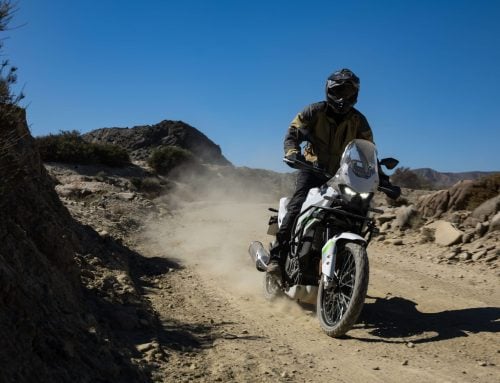
The Indian Himalayas demand a motorcycle with plenty of off-road capability and the Royal Enfield 450 is our preferred model and the one I would recommend to you. We have them fully kitted out for adventure riding with protective handguards, engine guards, soft panniers, luggage racks, tank bags, USB charger and handlebar risers for those ‘on the peg’ moments.
By the time you read this, we’ll have added the new 2025 model KTM 390 Adventure to our Himalayas fleet too which is made in India. We’ll be testing it on our Roof of India tour, and there are few better ways to test a bike.
You can see a theme running through all the motorcycles I’ve mentioned in that none of them are large-capacity adventure or touring machines like a big BMW GS or Honda Africa Twin. India is much better suited to smaller-capacity motorcycles like those above that are rugged and agile enough to deal with the varied road and traffic conditions we come across.
What gear should I wear?
Proper riding gear is essential for riding in India. A good quality full-face helmet is recommended as an open face lid doesn’t offer enough protection. I personally prefer goggles for riding in the Himalayas because there is a lot of dust to contend with. I carry two pairs, a dark set for sunny conditions and a clear set for rain, or just in case we need to ride in the dark.
However, riding in the dark is something we always try to avoid, and we set out the daily timings accordingly. But this is motorcycle adventure and sometimes it doesn’t go plan. Being prepared is essential. I think it’s akin to bringing a first aid kit. You bring it and hope you don’t need it. That’s preparation.
Sticking with the Himalayas for now, I recommend a high leg enduro style boot with a solid sole, waterproof for the water crossings, and good ankle protection.
 Wearing the right gear is essential for riding in India
Lightweight gloves are good as long as they have enough protection. Avoid leather gloves as they’re no good for changeable weather conditions and go hard when drying out.
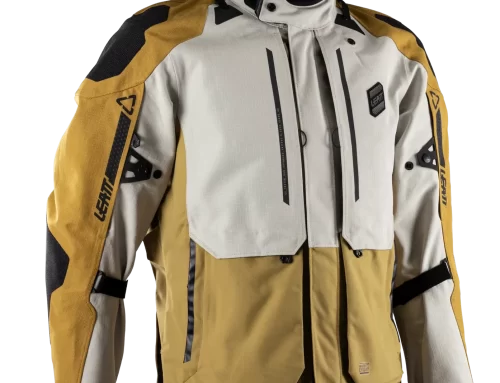
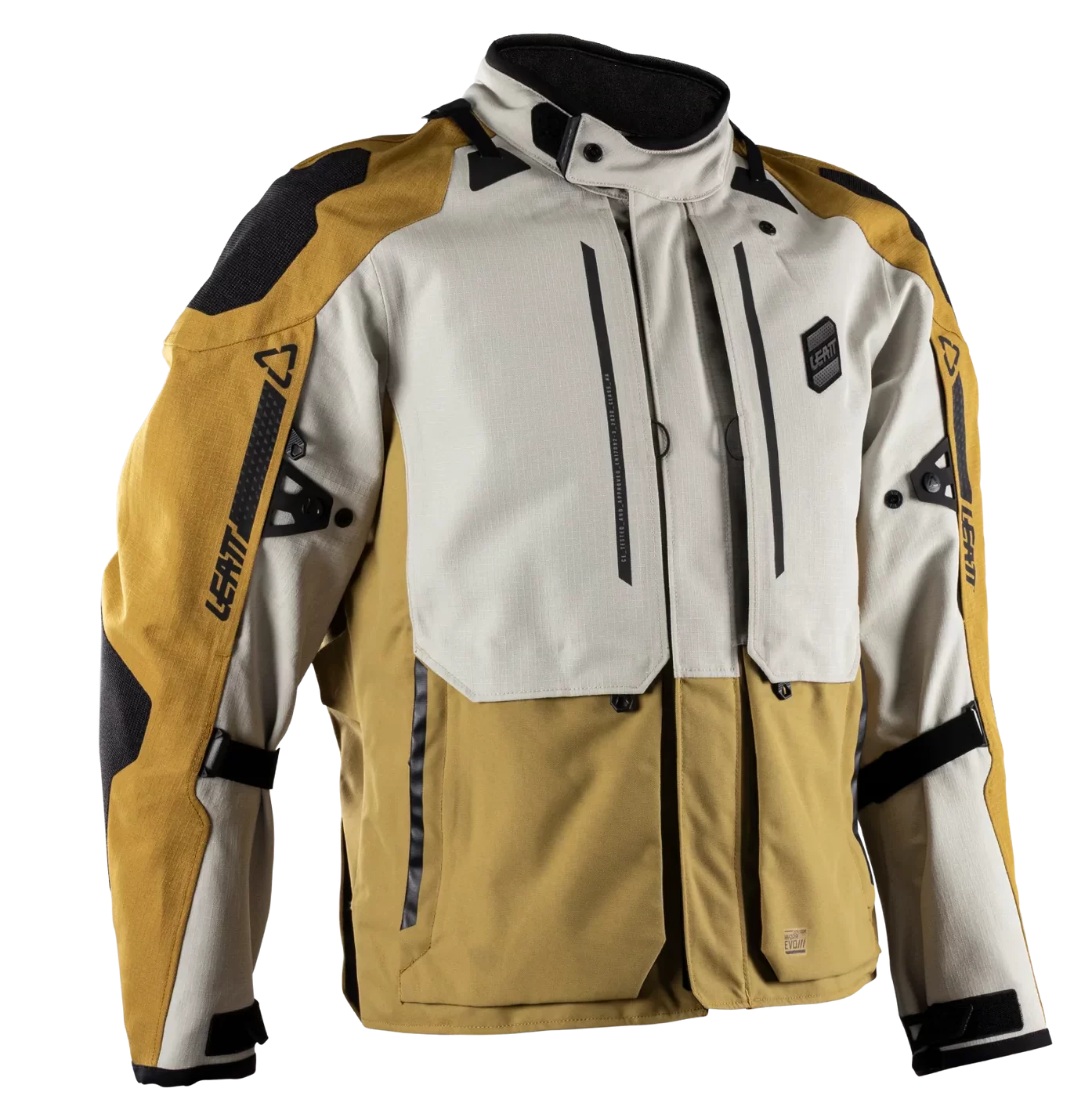
Lightweight trousers and jackets with built in armour is perfect. Two-piece good quality waterproofs are an essential item and can be used for rain and to stave off wind chill.
For South India, I use a full-face helmet with a visor as there is very little dust. Lightweight riding gear is fine, as are summer riding gloves and a smaller type of riding boot that covers just over the ankle.
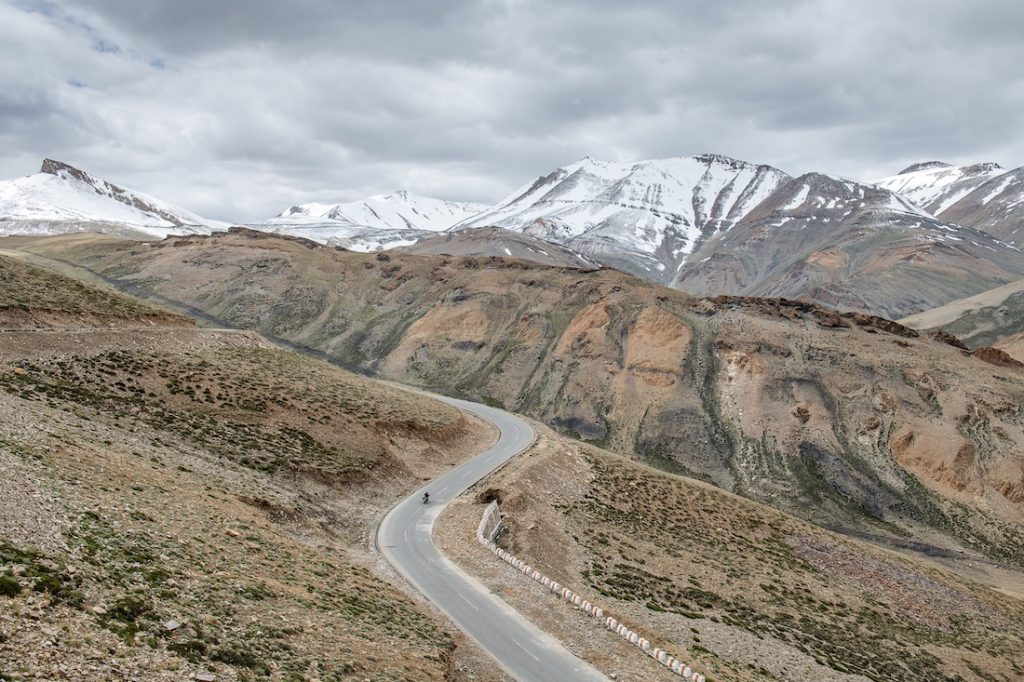 Riding the Himalayas is, literally, adventure biking on a whole different level
Riding gear that is vented is perfect for those warmer days. One of the most useful and overlooked items you can take is a proper waterproof bag for documents, etc. This is not expensive and is an essential item.
And if you’re riding in South India, another essential item is your swimming gear. There’s nothing better than getting in the sea or a pool after a long hot day in the saddle.
Logistics
On all our trips, we carry every rider’s luggage in our support truck which meets them at the end of the day. We also always carry spare fuel just in case it’s needed. If you’re riding solo, I’d recommend you do the same.
As for accommodation India, the quality and cost vary widely depending on how you like to travel, from a few pounds a night in basic hostels to luxury stays costing a fair amount more.
 Find the rider in this picture, if you can
Our accommodation is booked in advance and ranges from stunning beach resorts, mountain lodges, remote camping, to luxury houseboats. After a busy and exhilarating day on the bikes, it’s good to kick back in comfort.
When it comes to safety, India has a population of 1.5 billion people and gets very busy in the towns and cities which we try to avoid. The road rules are flexible to say the least and a very different approach to riding is required.
Staying aware at all times is essential, especially to to avoid sleeping cows in the middle of the road. Slow down, use the horn and enjoy the ride. This is India.
What do I need before leaving home?
A current passport with a minimum six-month validity is required. A tourist visa is also required for India and there is now a Visa Upon Arrival system which is done online and takes around 24 hours for approval. Travel Insurance is a must for riding in India and we make it mandatory for participation on all our rides.
What are you waiting for?

If you’ve ever dreamed of riding in India, then now’s the time to chase that adventure. Of course, I’d love you to join me on a ride with Nomadic Knights so I can show you why I fell in love with riding in India all those years ago and continue to enjoy every moment I’m exploring this beautiful country.
But no matter how you visit, I hope this guide has inspired you to seek out your next two-wheeled adventure and explore the country I’m proud to call my home.
Who’s writing?

I’m Alex, the founder and lead rider of Nomadic Knights. I’m originally from Scotland but upped sticks and moved out to India full time back in 2010 after becoming captivated by the country.
As an in-country tour operator, running Nomadic Knights isn’t a job for me, it’s a way of life. In my down time, if you can call it that, I’ve ridden and explored thousands of miles of roads less travelled across India. The result is I now have local and intimate knowledge of the best places to ride.
I lead every Nomadic Knights ride from the front and because I live in India, I don’t rely on guides or subcontractors. We do everything ourselves, from start to finish. I work on giving every rider the most authentic and genuine experience possible, whether that’s across South India, to the heights of Mount Everest in Tibet, or deep into the Indian Himalayas.
Want to ride in India?
 This could be you…
You can discover the joys of riding in India yourself by getting in touch with Alex and signing up for an upcoming Nomadic Knights adventure. He runs tours throughout the country whether you want to ride deep into the Himalayan mountains or enjoy sun-soaked adventures along the south coast of India.
Nomadic Knights doesn’t use agents, so to begin your adventure, head over to www.nomadicknights.com or you can chat, call, or WhatsApp Alex directly on 0091 9623 048879.